
JD Sports - My Account
Context
Customer service contact data was flagging a clear pattern - customers were reaching out about order tracking at a volume that suggested a self-serve failure, not a process one. The information existed. The problem was customers were struggling to find it.
The brief came in focused on the symptom: too many contacts.
My job was to identify the structural cause and design a solution that made My Account work harder as a self-serve surface - so customers wouldn't need to call at all.
This was a web-only project, scoped to fix the hierarchy and visual treatment of the existing experience.
Project Team
The project team consisted of a Product Manager (PM), Business Analyst (BA), User Research, Customer Service representatives, and myself as the Product Designer from JD Sports. Engineering was delivered by a nearshore third-party development team, who were responsible for the technical build and implementation.
The Real Problem
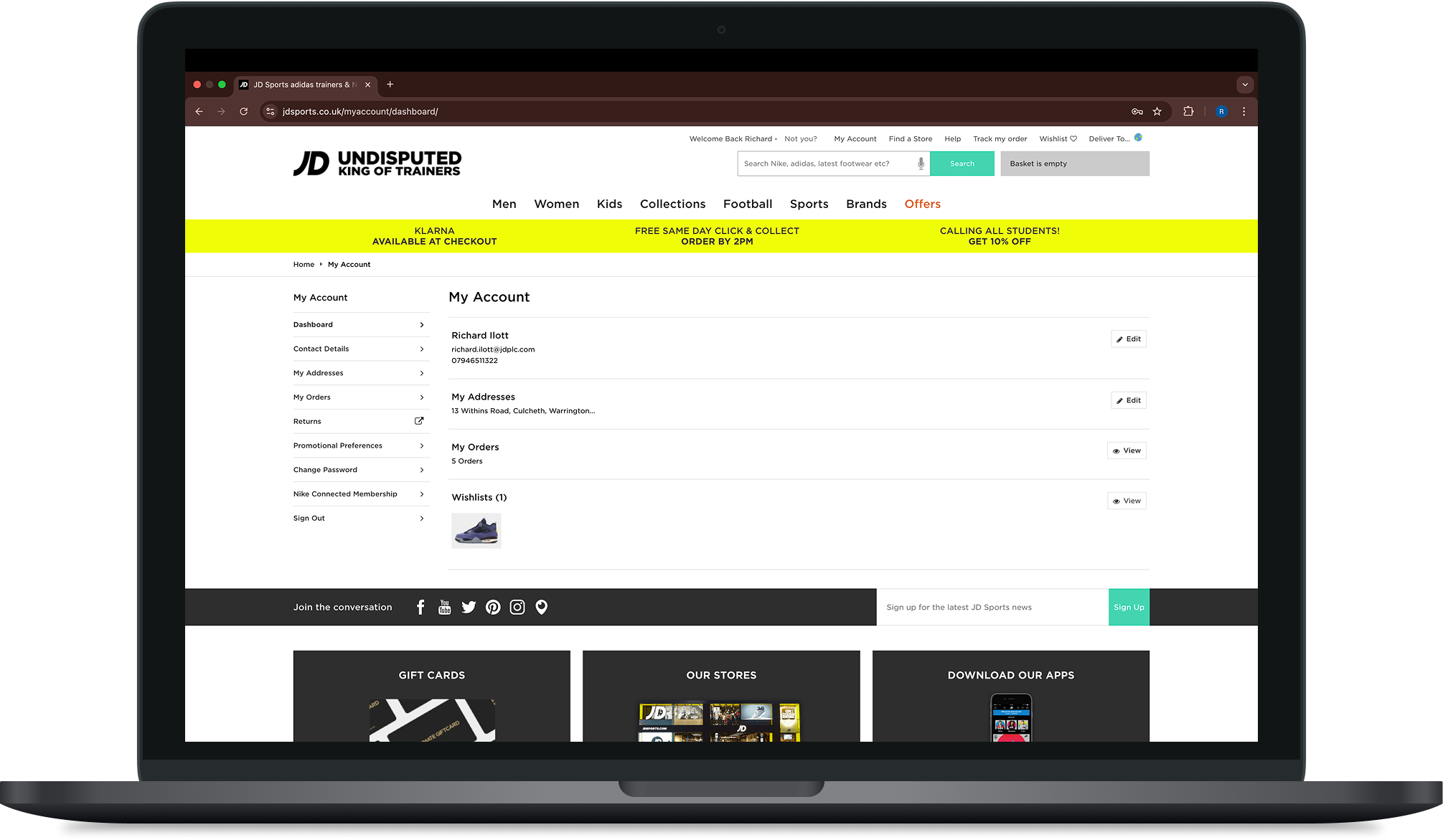
A flat, fragmented structure built around business logic - not customer behaviour.
An audit of the existing My Account experience revealed two compounding problems that together explained the CS contact volume
Structural - the hierarchy was flat. High-frequency tasks (order tracking, returns) sat at the same visual level as low-frequency ones (newsletter preferences) There was no sense of priority.
Visual - the page offered no hierarchy of importance. Everything competed equally for attention, increasing cognitive load from the moment of landing.
Approach
1. Reframe the Brief
In kickoff, I aligned the squad around redefining structure - not refreshing screens.
We used replatforming as a chance to rationalise IA rather than replicate legacy decisions.
2. Ground in Evidence
I synthesised:
Historic research
Customer feedback
Competitor benchmarking (10 retail platforms)
Patterns were consistent:
Order tracking prioritised
Clear transactional vs preference separation
Cross-platform structural consistency
3. Align Stakeholders Through Evidence
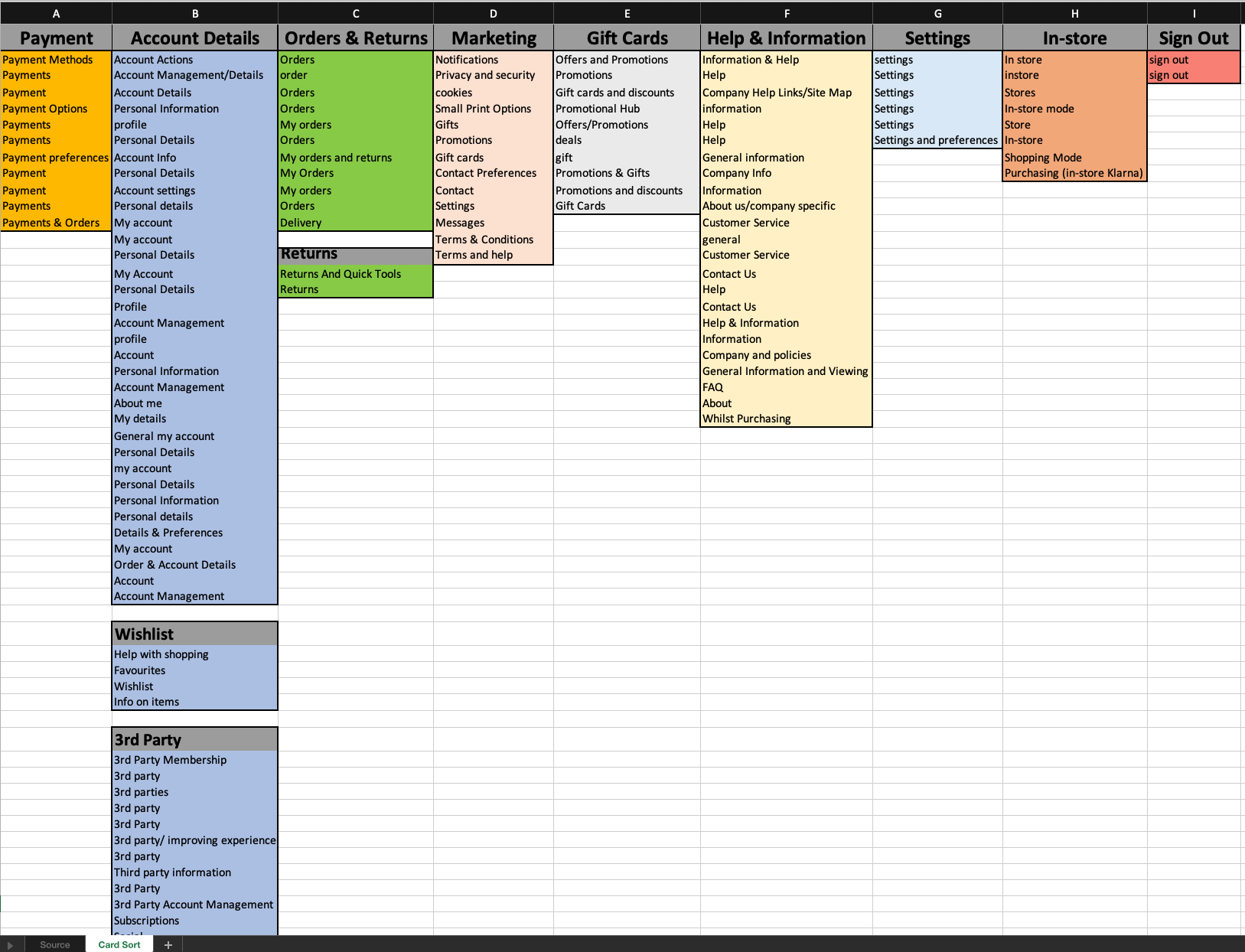
I ran a remote card sort with customers — then repeated it internally.
The exercise exposed misalignment between business assumptions and user expectations, particularly around the prominence of orders and support.
Research became a tool for alignment, not just insight.
Strategic Decisions
From synthesis, I proposed:
Re-prioritising Orders & Returns as the primary entry point
Separating transactional actions from preferences
Introducing consistent iconography across platforms
This shifted the mental model from fragmented settings to structured account management.
Delivery Under Constraint
Third-party integrations limited backend flexibility.
Rather than over-designing edge cases, I:
Prioritised hierarchy over micro-optimisation
Validated navigation through prototyping
Scoped ambition against delivery risk
We focused on high-leverage structural change within real constraints.
Outcome
We saw a reduction of 8% Customer Service contacts regarding Orders and Returns within 12 weeks of launching
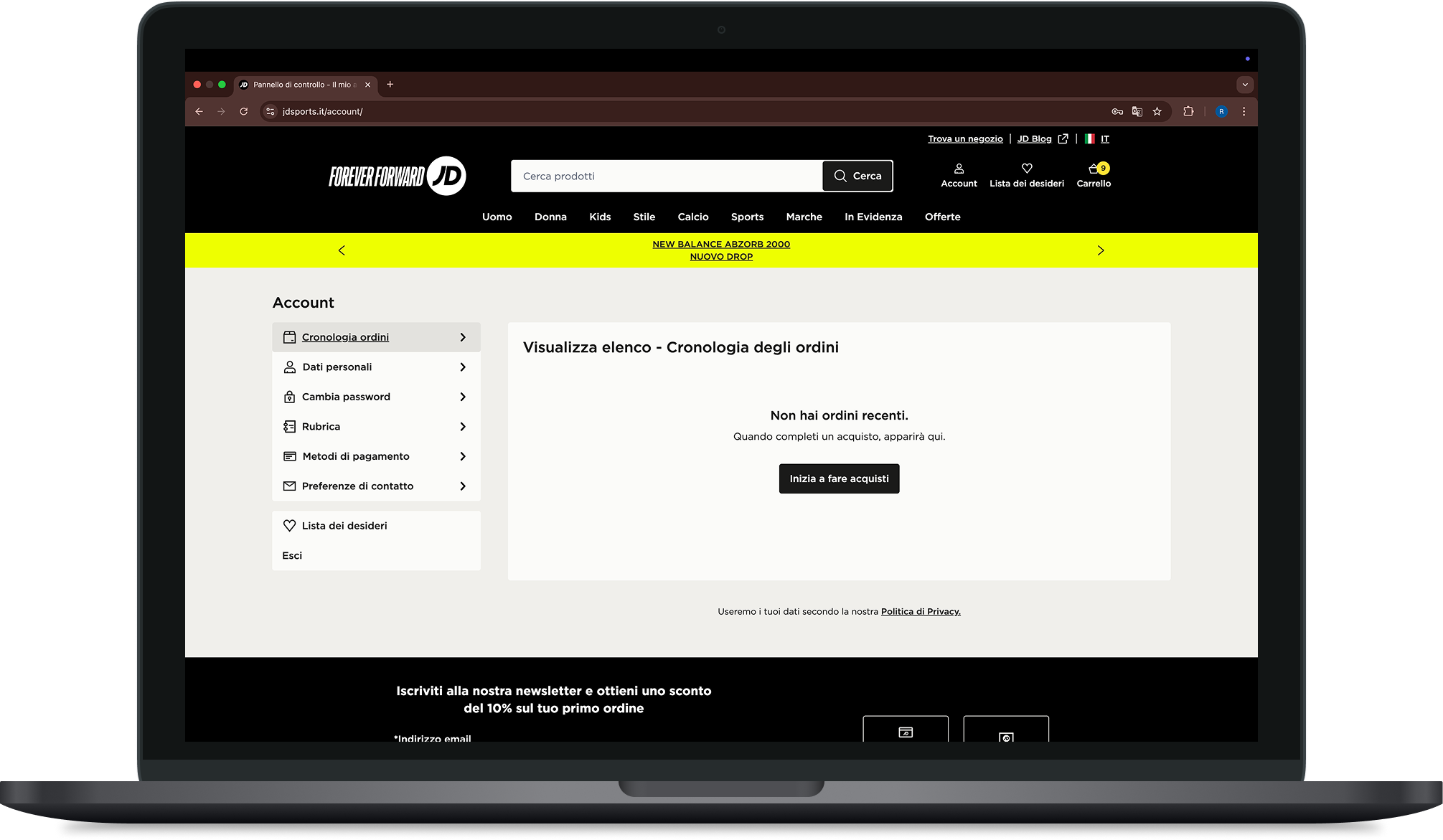
Order tracking surfaced - Repositioned as the primary post-purchase entry point
Reduced cognitive load - Visual hierarchy reinforced structure — less scanning, faster action
Cleaner account management - Fragmented sections consolidated into logical, labelled groups
We didn’t ship a visual refresh.
We shipped a structural correction.